
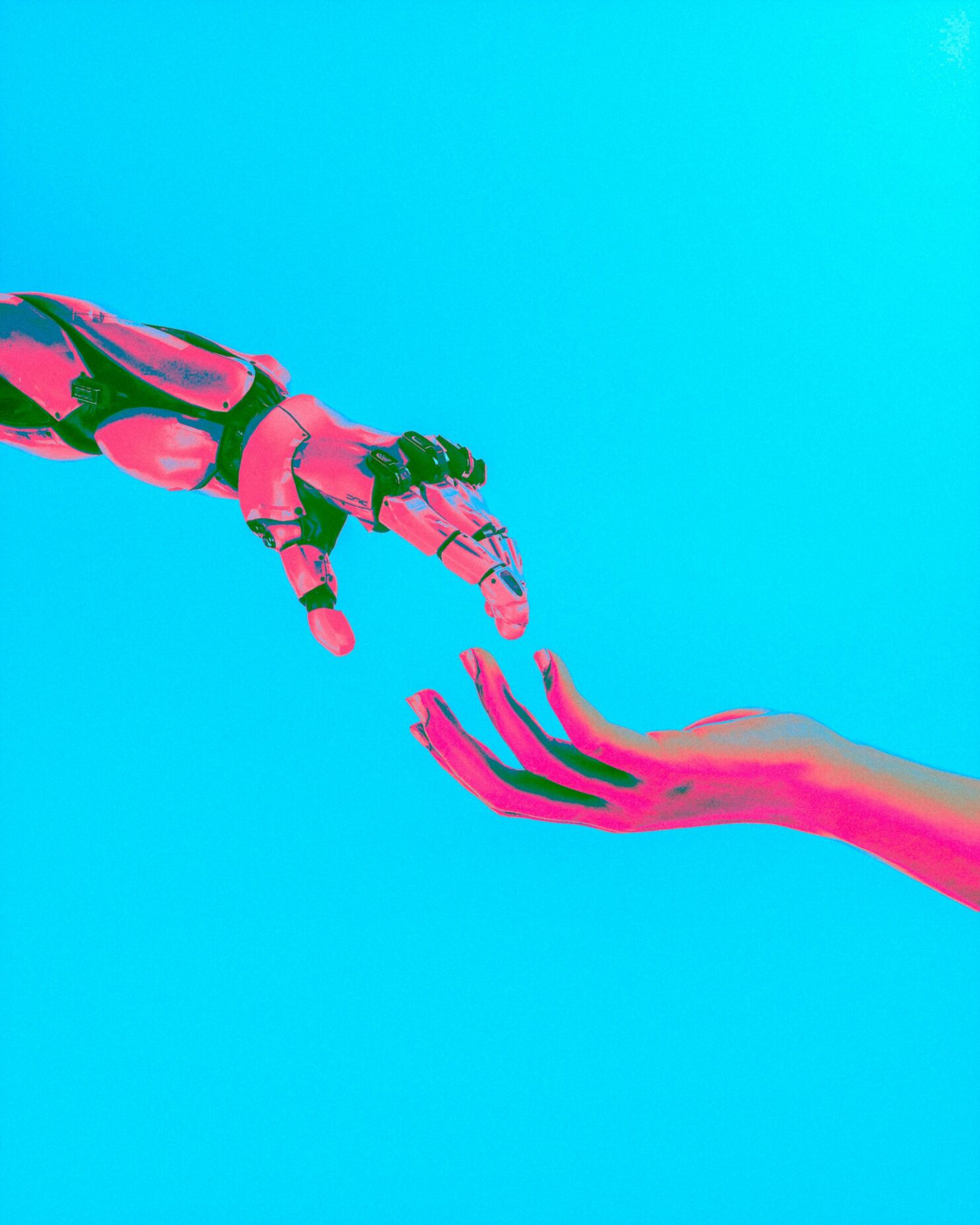
 o Fashion has always begun in this tender space: the convergence of taste and intuition, memory and culture, emotion and risk. It’s the place where a designer says, I see it, long before anyone else can.
We’ve witnessed this magic before. In 1947, Dior’s Bar jacket cinched the waist and released the war’s tight fist on the world, ushering in a new way of being—soft power, sculpted hope. Decades later, Alexander McQueen turned a runway into a beating heart of theater: Shalom Harlow in a white dress, pirouetting as robots spray-painted her in a duet of danger and grace; Plato’s Atlantis, where technology and biology fused into a prophecy of beauty. Long before the industry had a name for it, Elsa Schiaparelli invited surrealism to dinner—lobsters on silk, skeletons stitched in shadow, keys and eyes and anatomy rendered into wit—reminding us that imagination is the most radical fabric of all.
AI can’t replicate these moments because they weren’t just designs; they were decisions - human, embodied, and brave.
This moment in our industry isn’t people versus machines. It’s about quieting the static so the music of creation can be heard again. AI won’t replace designers. It will replace the bad processes that keep them from doing what only they can do.
Creativity Cannot Be Automated
Let’s say it plainly. The best work in fashion is not a formula.
Designers carry proportions in their bones. They read the street, the stage, the headlines, and the hush. They know fit not as a vector but as a lived conversation with many bodies.
They hold ethics and empathy, memory and meaning, in every choice—what to reveal, what to protect, what to say without words.
AI can generate options. Designers decide what matters. The difference is not subtle. It’s the difference between possible and true.
What AI Should Replace
If there’s a villain in this story, it’s not technology. It’s the friction that steals hours from the hands that make.
Let AI take the weight of what is repetitive, redundant, and slow:
- The scavenger hunt for references across folders, links, and emails
- First-pass sketches that get thrown away but must exist to move
- Reformatting details that refuse to stay consistent from season to season
- Disconnected systems that won’t speak to one another
- Endless sample rounds for incremental changes
- Data entry that nobody chose—and everyone resents
These are not creative acts. They are toll roads. Let’s remove them.
A Partnership Between Human Imagination and Intelligent Tools 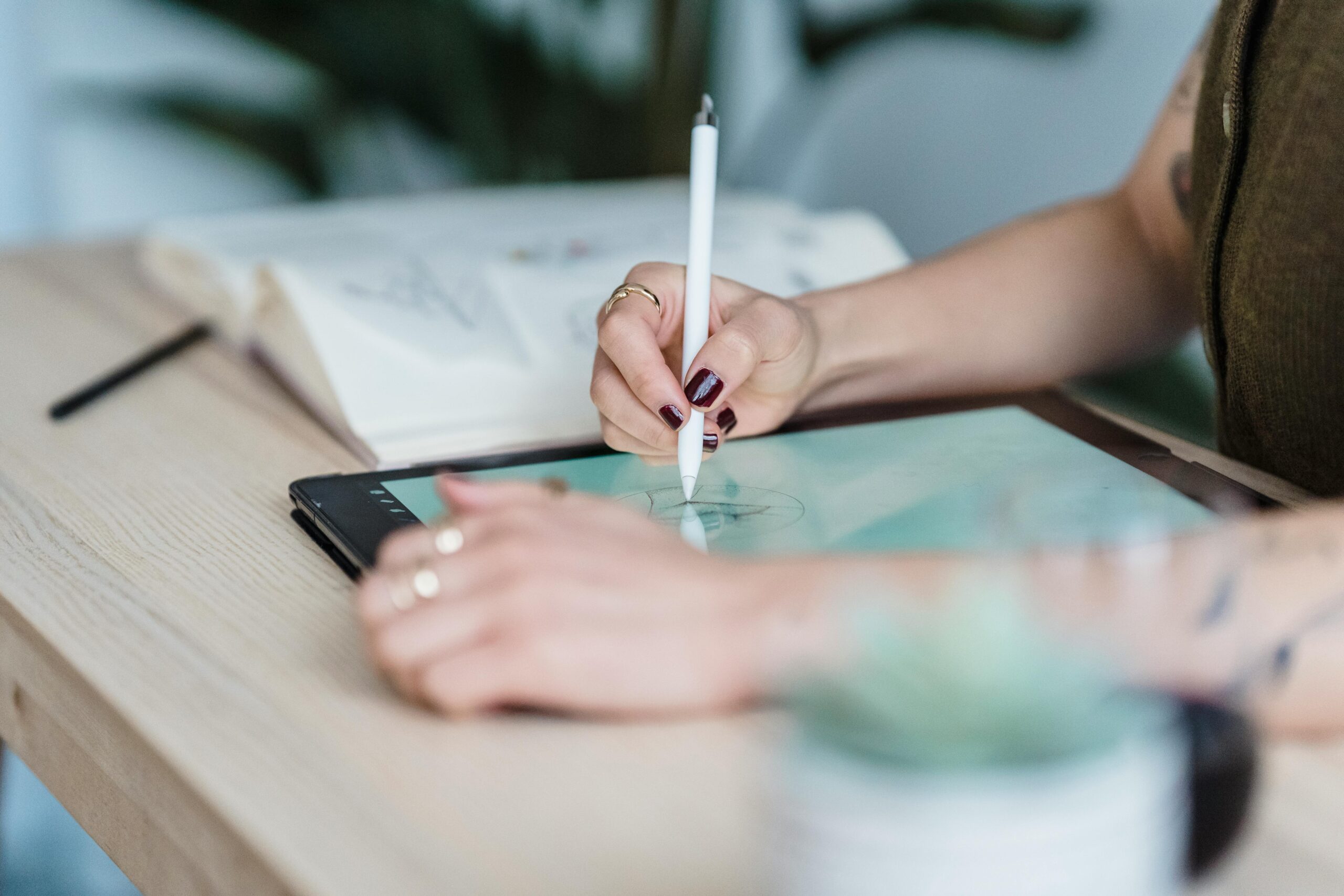
The future is not artificial. It’s augmented.
A designer still begins with a vision, tone, silhouette, and story. Then AI becomes the steady studio assistant: gathering global signals into clear themes; moodboards into early variations; color stories that honor the brand’s DNA; quick studies that bridge the gap between concept and possibility.
From there, the human eye leads. What belongs? What doesn’t? What needs to be softened, sharpened, pushed past the obvious? Culture isn’t static, and neither is taste. Designers make the calls that algorithms can’t.
As the sketch becomes a spec, AI steps back in to smooth the handoff: cleaning metadata, pre-filling the routine lines of tech packs, syncing communication so development can move with clarity.
The craft remains human. The clutter dissolves. This is not speed for speed’s sake. It’s momentum with meaning.
Practical Enhancements That Protect Originality
Used with intention, AI can:
- Strengthen trend research with real signals (search, social, and sales patterns)
- Propose preliminary silhouettes and palettes from moodboard inputs
- Visualize changes before a sample is cut
- Streamline documentation for development and merchandising
- Help assess how a collection holds together as a coherent story
These are not replacements for the designer’s voice; they are amplifiers. They give back the hours where craft can breathe.
Leadership With a Creative Spine
For executive teams, this isn’t just a tech shift. It’s operational and cultural. The mandate is simple: empowerment, not replacement.
Invest in tools and training. Create guardrails that honor brand DNA. Remove fear from the conversation and invite curiosity in. Make it clear, publicly and repeatedly, that creativity is the company’s center of gravity, and AI exists to keep it there.
Guardrails That Protect the Muse 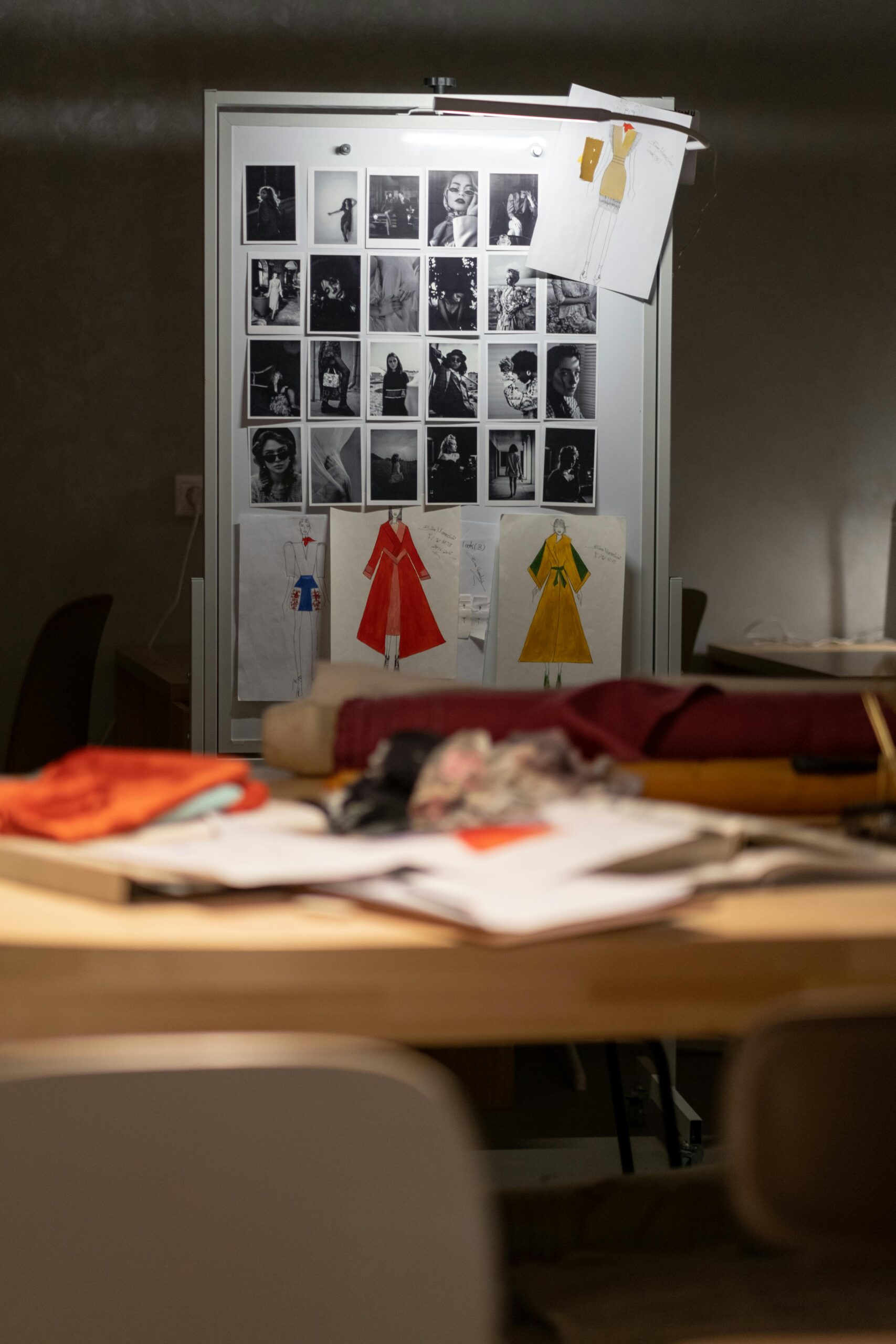
Helpful, human-centered safeguards might include:
- A clear brand DNA rubric that guides every prompt and decision
- Designer-led checkpoints at all creative milestones
- Policies against generic, vague prompts that yield generic, vague work
- Standards for data quality and source integrity
- Transparent communication so adoption feels safe—and shared
Good governance builds trust. Trust unlocks courage. Courage makes new work possible.
Why This Matters Now
The industry is moving fast. Customers expect clarity and care. Supply chains are tight. Cycles tighten, too. Teams are asked to deliver poetry with precision.
Designers cannot do more by spending more time on less meaningful tasks. AI offers a way to restore balance, to build seasons with intention, to move from hunch to hypothesis more fluidly, to make space for risk again.
With care, AI does not make fashion less human. It makes it more human by removing the noise around the work we love.
The Future Is Designer-Led and AI-Enabled
The designers who thrive won’t be the ones who resist every change, nor the ones who outsource their taste to a tool. They’ll be the ones who know their value, hold their point of view, and use AI to sharpen it.
Dior taught us how a silhouette can change a mood. McQueen proved that theater and technology can dance. Schiaparelli showed that imagination has no dress code. The lesson is the same in every era: the human mind remains the atelier where it all begins.
AI will not replace designers. It will clear the runway, hold the pins, and keep the lights on,
so imagination can take its rightful place at center stage.
Design remains human. AI helps it shine.
This article was featured in Issue 3: Apparel Playbook of 2026 of the Clothing Coulture Magazine. Read and download the full magazine here: https://www.clothingcoulture.com/clothing-coulture-magazine