
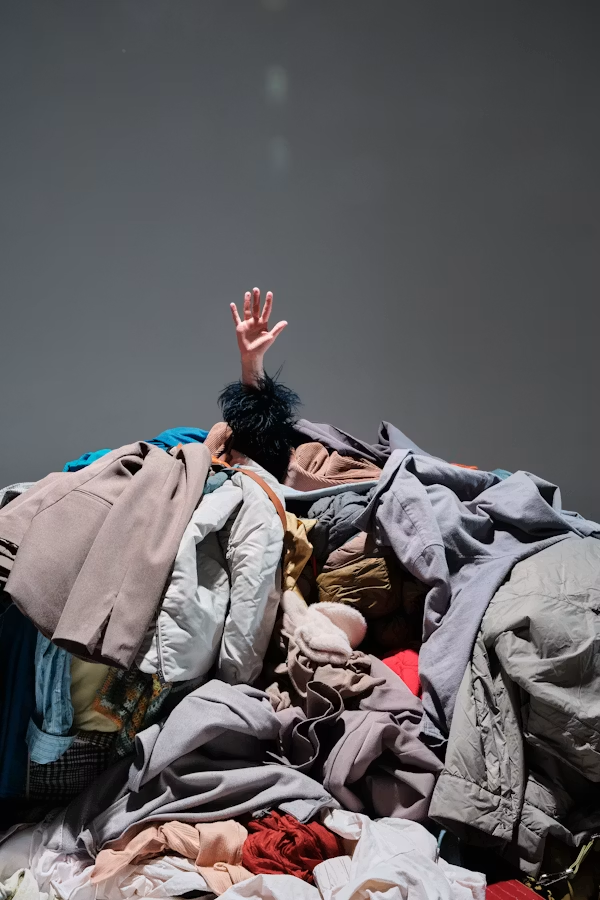
Fashion loves to talk about growth and glamour. But what happens when the economy slows down? That was the question on the table in a recent Clothing Coulture conversation, and the answer is reshaping how the smartest apparel brands plan their economic strategies for 2026.

The short version: the old playbook of chasing volume and rapid expansion is not working anymore. Endless consumer demand and cheap capital are no longer fueling the run. In a slower-growth era, the brands that thrive will be the ones protecting margins, tightening operations, and making more calculated bets. Efficiency and resilience now matter more than speed.
The consumer changed first
Before brands rethink anything, it helps to understand who they are selling to now. Consumers are buying with intention. They are purchasing fewer pieces, expecting higher quality, and wanting a longer life out of what they own. That is not a negative; it is good for the customer and good for the planet, with less ending up in landfills.
Price sensitivity is still real, but it now travels alongside a demand for value. People are asking two questions before they buy: Do I really need this? and Does this brand align with my values? Those questions force brands to rethink everything from pricing to storytelling.
Margin protection is the new growth strategy
In a slower-growth moment, you cannot lean on volume to cover inefficiencies. Every dollar counts, and margin is what keeps the lights on. Rising costs across materials, labor, logistics, and tariffs are all squeezing profitability at the same time. Brands that are not watching margin at every level risk scaling themselves straight into trouble. Healthy margins do the opposite. They give you room to invest in innovation and the flexibility to weather uncertainty when it comes.
So how do you protect margin without cutting quality? A few moves matter most:
- Start with smarter assortment planning. It is the first conversation we have with nearly every brand. When we run the analysis, the pattern repeats: about 90% of profitability comes from roughly 10% of the SKUs. You can do more on fewer styles.
- Negotiate better terms, and keep your options open. Look for multi-source supply so a single price spike somewhere in the world does not sink a season.
- Invest in demand forecasting. The technology has matured. Better forecasting reduces overproduction, and overproduction and markdowns are two of the fastest ways to erase a year of profit.
- Protect quality and chase efficiency, not corners. Shorter lead times, digital sampling, leaner operations. These save money without touching the product the customer actually holds.
 Seasonless, modular, and less but better
Several strategies in the conversation pointed in the same direction. Brands are embracing more seasonless collections. We live in climate-controlled lives now, moving from a heated car to a heated home, so customers can wear certain styles year-round. That alone reduces seasonal markdowns. Modular design, where pieces share fabrics and construction details, is leading the way. Many mid-market labels have shifted to smaller, more frequent drops, which lowers inventory risk and keeps customers coming back to see what is new. Even luxury houses are doubling down on timeless pieces over fast trends.
It all rolls up into a simple idea: less, but better. Fewer, higher-quality pieces that deliver real value and last longer. When a customer falls in love with a favorite tee and the fabric it is made from, they come back. A lot of business is built on that kind of loyalty.
Pricing that reflects value, not just cost
Pricing cannot only cover costs; it has to reflect perceived value. We often meet designers who have undercut their own work by pricing it just high enough to cover expenses, leaving no buffer for profit, marketing, or a tough stretch. In 2026, consumers will be a little more price-sensitive, but still willing to pay for quality and transparency. The move is away from aggressive discounting, which costs are working against anyway, and toward tiered pricing, limited drops, and clear storytelling about why a product costs what it does.
Value is not the same as expensive. Frame it around longevity and purpose rather than exclusivity. A cheap garment replaced three to five times a year often costs more over its life than one well-made piece you replace once every three years. That is the math we have used building uniform programs, and it is the message that resonates far more than luxury buzzwords: the piece is designed to last, so you buy less and enjoy it more.
 Where the profitability actually lives
Most operational waste shows up in two places: overproduction and inefficient workflows. Too many SKUs, runs committed without accurate forecasting, and dead inventory on one side. Manual processes and poor communication between design, sourcing, and production on the other. Streamlining both can save a company a tremendous amount.
This is also where strong mid-level teams earn their keep. Sourcing, product development, and operations are the backbone of production. When those teams are strong, they catch problems earlier, negotiate better terms, and hold timelines. Documented processes reduce dependency on a handful of key people, create consistency, and improve scalability. It is not glamorous, but it is where profitability quietly lives.
That principle also answers a question we hear often, given all the leadership turnover in this industry: how do you reduce dependency on founders and senior leaders? You build systems, not just analytics. Too many brands route every decision through their founder, which creates bottlenecks and burnout.
Document workflows, delegate authority, and empower mid-tier leaders. When a business runs on processes instead of personalities, it becomes more resilient, and far more attractive to invest in if leadership ever decides to transition out. Ongoing skill development matters here too, because formal education rarely prepares teams for a landscape that changes this fast.
One piece of advice for 2026
Build resilience into every part of your business. Tighten operations, protect margins, and stay laser-focused on your core customer. Do not chase growth for the sake of growth; chase clarity and adaptability. The brands that win in 2026 will be the ones that can pivot quickly without losing their identity.
People often ask why a company like ours has survived multiple decades. It really does come down to perseverance, resilience, and focus. In a slower-growth era, survival is not about chasing scale. It is about mastering efficiency: protecting your margins, planning inventory with precision, and embracing that less-is-better approach. Consumers are buying with intention, and brands have to respond with purpose. The future belongs to those who can balance creativity with operational strength.
Work with Stars Design Group. Whether you are launching, scaling, or pivoting, we provide design, technical development, production, and consultancy under one roof. From design and technical development to production and full-service consultancy, we help brands and retailers navigate a challenging global landscape. Start the conversation with Emily Lane at [email protected].
Frequently Asked Questions
What is the biggest economic challenge for fashion brands in 2026?
Slower growth combined with rising costs. Brands can no longer rely on endless demand or cheap capital, so protecting margins and operating efficiently matter more than rapid expansion.
How can fashion brands protect their margins?
Plan assortments tightly (about 90% of profitability comes from roughly 10% of SKUs), negotiate better supplier terms with multi-source options, invest in demand forecasting to cut overproduction and markdowns, and protect product quality while streamlining operations.
What is seasonless fashion and why does it matter?
Seasonless fashion is apparel designed to be worn year-round rather than tied to a rigid seasonal calendar. It reduces markdown risk, lowers inventory pressure, and keeps pieces relevant longer.
What does less but better mean in fashion?
Offering fewer, higher-quality pieces that last longer and deliver real value. It reduces waste, protects margins, and builds customer loyalty.
How can fashion brands reduce dependency on founders and executives?
Build systems, not bottlenecks. Document workflows, delegate authority, and empower mid-level teams so the business runs on processes instead of personalities.
| Who is Stars Design Group?
Stars Design Group is a global design and production house with more than 30 years of experience, offering end-to-end apparel and accessories manufacturing plus full-service brand consultancy. Reach the team at [email protected]. |